- +1 (602) 922-5990
-
This email address is being protected from spambots. You need JavaScript enabled to view it. - Mon - Fri 8:00a - 5:00p AZ


-

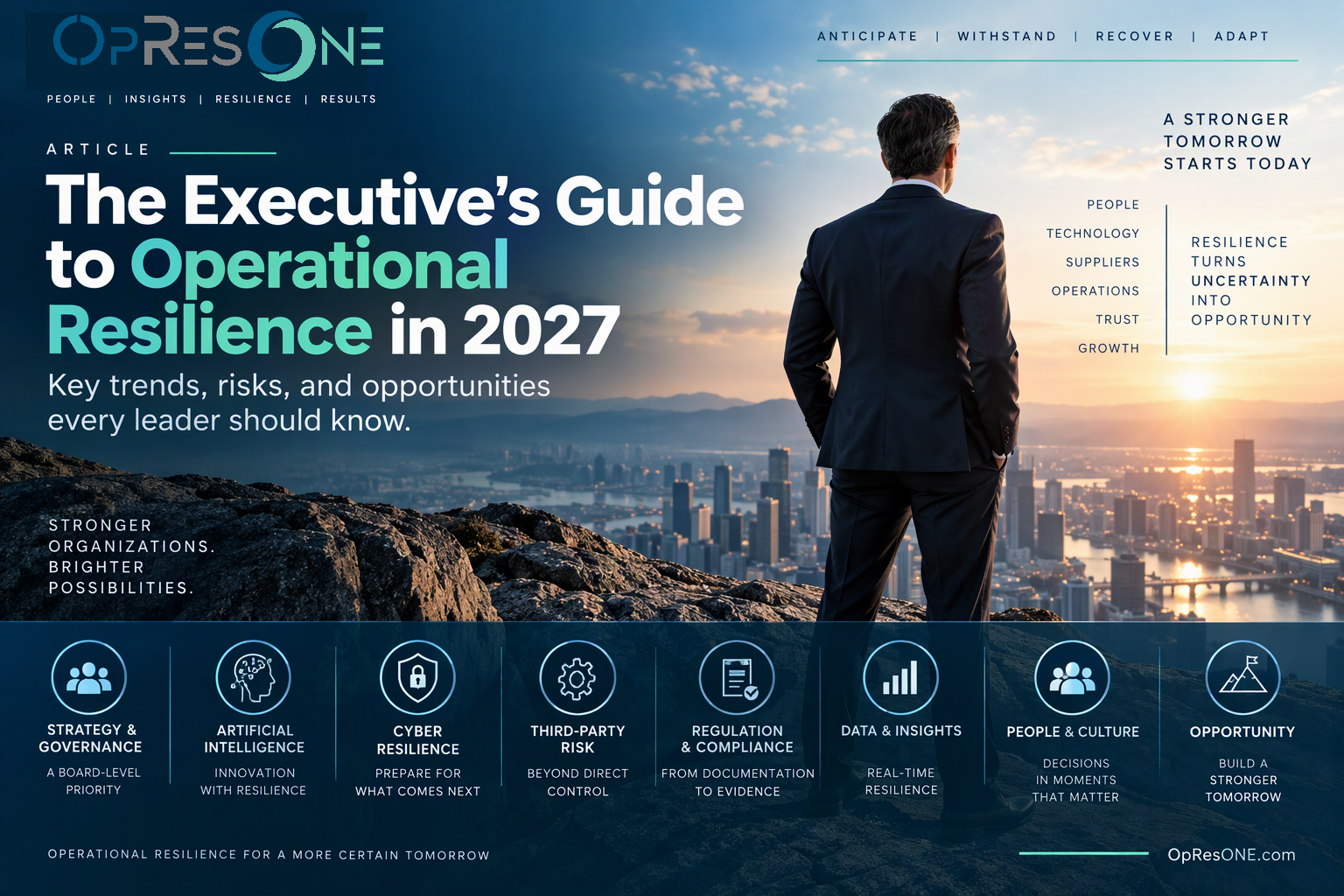
The organizations that lead in 2027 will not be those that avoid disruption. They will be those designed to absorb disruption, protect critical outcomes, recover intelligently, and adapt faster than the conditions around them change.
-
Executive perspective: Compliance tells an organization what it is expected to do. Confidence comes from knowing, through evidence, testing, measurement, and experience, that the organization can actually do it when conditions become difficult.
For years, organizations have responded to risk largely through a compliance lens. Policies are written. Controls are documented. Assessments are completed. Business continuity plans are maintained. Vendors are reviewed. Recovery procedures are recorded. Audits are performed. Findings are tracked.
All of these activities matter.
-
Supply chains have always faced disruption. What has changed is the speed, complexity, interconnectedness, and potential business impact of that disruption.
A supplier problem that once created a purchasing inconvenience can now interrupt production, delay customer services, expose sensitive information, disrupt critical technology, create regulatory concerns, or stop an essential business service altogether.
-
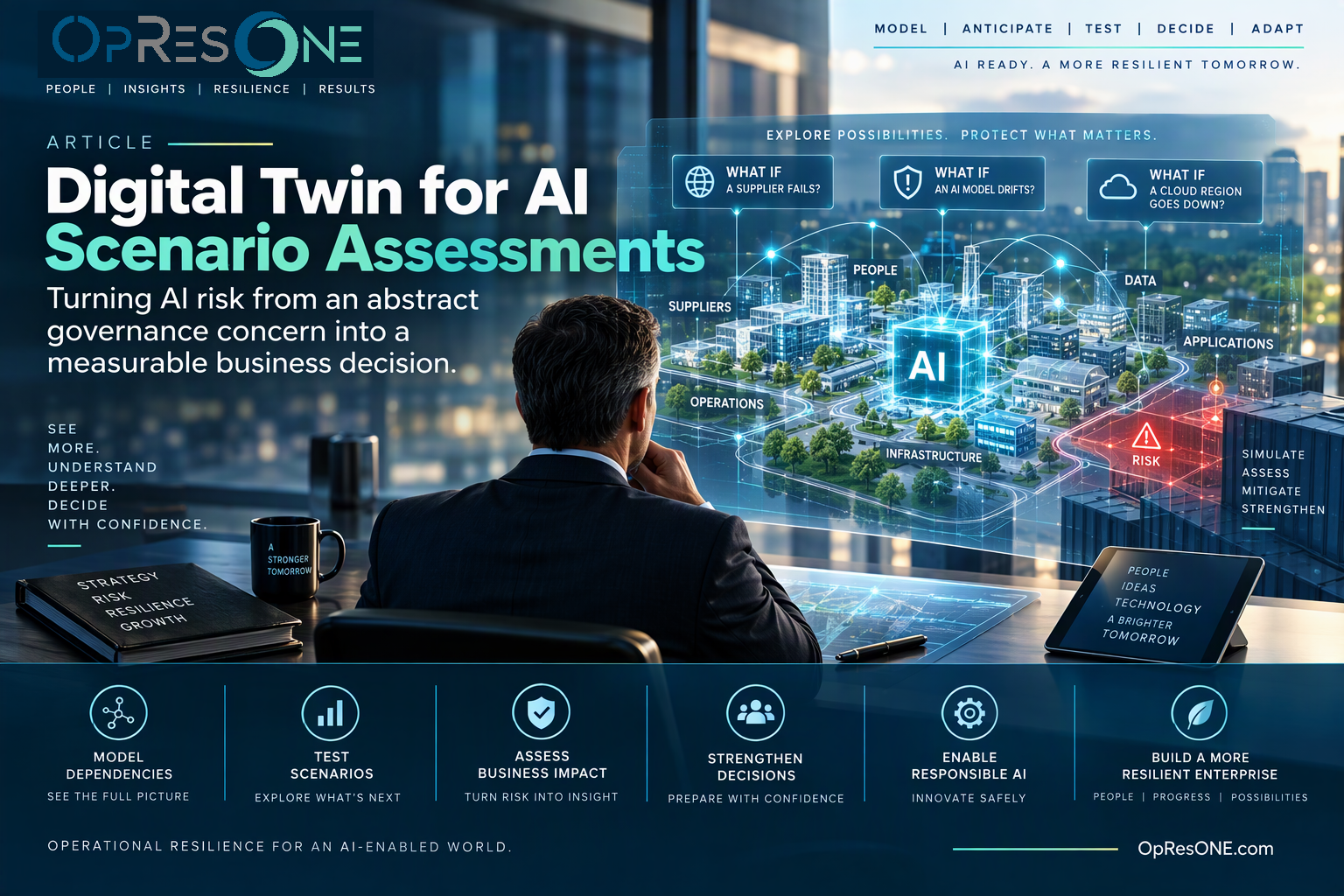 Artificial intelligence is moving rapidly from experimentation into the operating fabric of the enterprise. AI systems are influencing customer interactions, cybersecurity decisions, financial analysis, fraud detection, supply chains, software development, workforce productivity, risk management, and increasingly, decisions that once depended entirely on human judgment.
For executives, that creates extraordinary opportunity. It also creates a difficult new question.
-
Organizations invest significant time and resources creating business continuity plans, disaster recovery procedures, cyber response playbooks, crisis management frameworks, and third-party resilience programs. Those investments are necessary. Yet there is a fundamental difference between having a plan and knowing that the organization can execute it when disruption occurs.
That difference is testing.
-
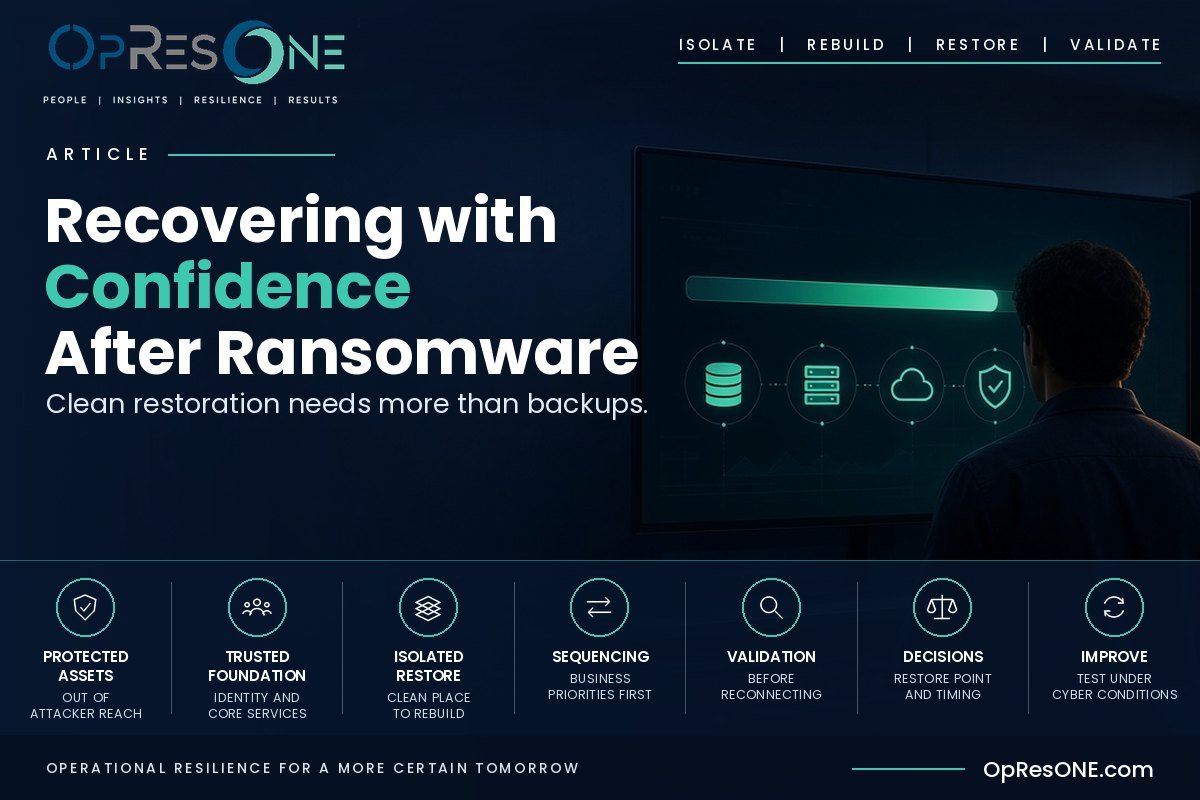
When ransomware strikes, the first question many executives ask is, "Do we have backups?" It is a reasonable question, but it is not the most important one. The harder questions are whether those backups are intact, whether they are free of the attacker's tools, which point in time can be trusted, what must be rebuilt before anything can be restored, and how the organization will know a restored system is safe to reconnect.
Clean restoration needs more than backups. It requires a recovery capability designed for an adversary who may have been inside the environment for some time, may have targeted backup systems deliberately, and may try to return. This article explains what that capability involves and how organizations can prepare for it. It is written for CIOs, CISOs, and the infrastructure and recovery leaders who would carry out the work.
-
Ask an IT leader whether critical systems can be recovered and the answer is often, "Yes, we back everything up." Ask for proof and the evidence is usually a backup job report showing green checkmarks. That report confirms something useful: data was copied. It does not confirm that the business can operate again. Between a successful backup and a working business service lie restored infrastructure, rebuilt applications, reconnected integrations, validated data, and people who know how to use all of it under pressure.
This article explains why restoration alone does not prove business readiness, and how organizations can build a clear, evidence-based picture of what they can actually recover, how fast, and to what point. It is written for CIOs, IT disaster recovery professionals, and the business leaders who depend on them.
-
During a major outage, recovery teams rarely fail because they do not know how to restore a system. They struggle because they do not know what that system needs before it can work, what else depends on it, and therefore what must come back first. An application restored ahead of the database it needs will not start. A database restored before the identity service that controls access cannot be used. A service brought back without the interface to a key partner may run but deliver nothing of value.
Dependency mapping is how organizations answer those questions before a disruption, rather than discovering the answers in the middle of one. This article explains what to map, how to turn maps into a recovery sequence, and how to keep them current. It is written for IT disaster recovery professionals, CIOs, and the business continuity teams who rely on accurate recovery plans.
-
Risk registers tend to list risks one at a time. A supplier might fail. A system might go down. A site might become unavailable. Each risk is assessed, given an owner, and managed. What these lists often miss is the way dependencies overlap. When several critical services rely on the same provider, the same software platform, the same data center region, or the same small team, a single disruption does not affect one service. It affects many at once.
This is concentration risk, and it is one of the least visible exposures in modern operations. It builds gradually, through sensible individual decisions: standardizing on a leading cloud provider, consolidating vendors to reduce cost, adopting a widely used security tool, centralizing expertise in a shared service. Each decision makes sense on its own. Together, they can create a point where one failure reaches across the organization.
This brief explains how concentration risk arises, how to make it visible, and how leaders can decide what to do about it.
-
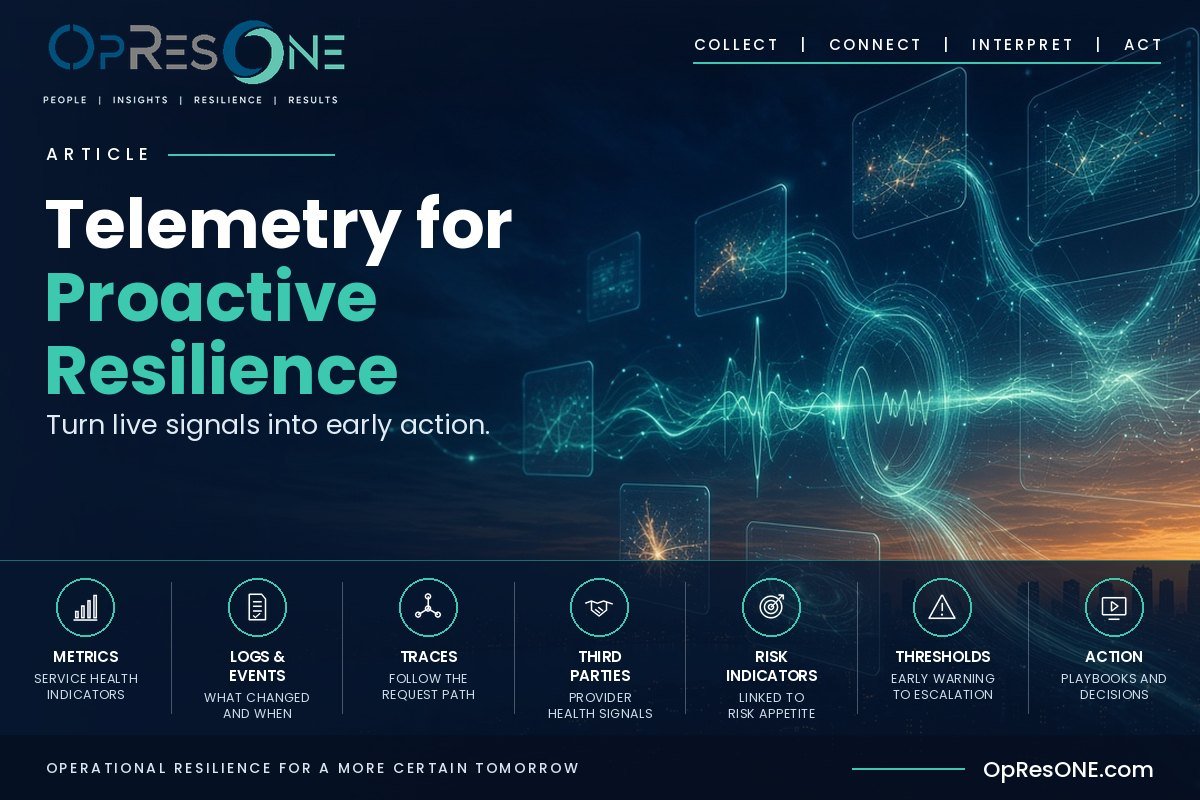
Most organizations already collect more operational data than they use. Applications write logs, infrastructure reports metrics, security tools raise alerts, cloud and SaaS providers publish service status, and business systems record every transaction. Yet when a disruption arrives, leaders often learn about it from a customer complaint, a social media post, or a call from a frustrated business unit. The signals were there. They were simply not connected to the services that matter, not interpreted in time, or not routed to someone with the authority to act.
Telemetry for proactive resilience means ingesting and analyzing real-time and near-real-time data across your environment to detect changes, identify emerging risks, and take preventive action before disruption escalates. This article explains what operational telemetry is, how to connect it to important business services and impact tolerances, and how to turn live signals into early insight that supports better decisions. It is written for operational resilience leaders, CIOs, and the risk and technology teams who support them.