- +1 (602) 922-5990
-
This email address is being protected from spambots. You need JavaScript enabled to view it. - Mon - Fri 8:00a - 5:00p AZ


-

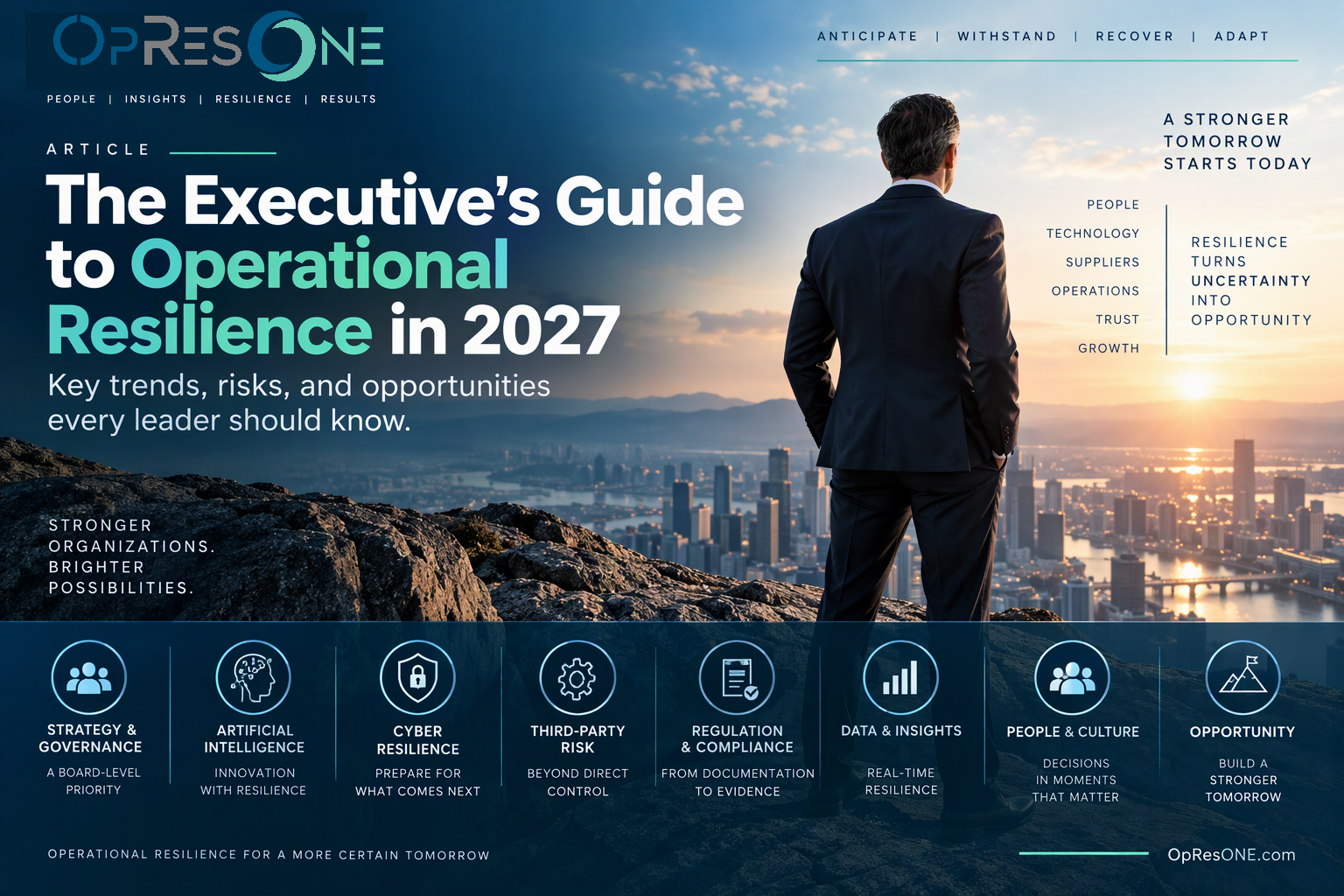
The organizations that lead in 2027 will not be those that avoid disruption. They will be those designed to absorb disruption, protect critical outcomes, recover intelligently, and adapt faster than the conditions around them change.
-
Supply chains have always faced disruption. What has changed is the speed, complexity, interconnectedness, and potential business impact of that disruption.
A supplier problem that once created a purchasing inconvenience can now interrupt production, delay customer services, expose sensitive information, disrupt critical technology, create regulatory concerns, or stop an essential business service altogether.
-
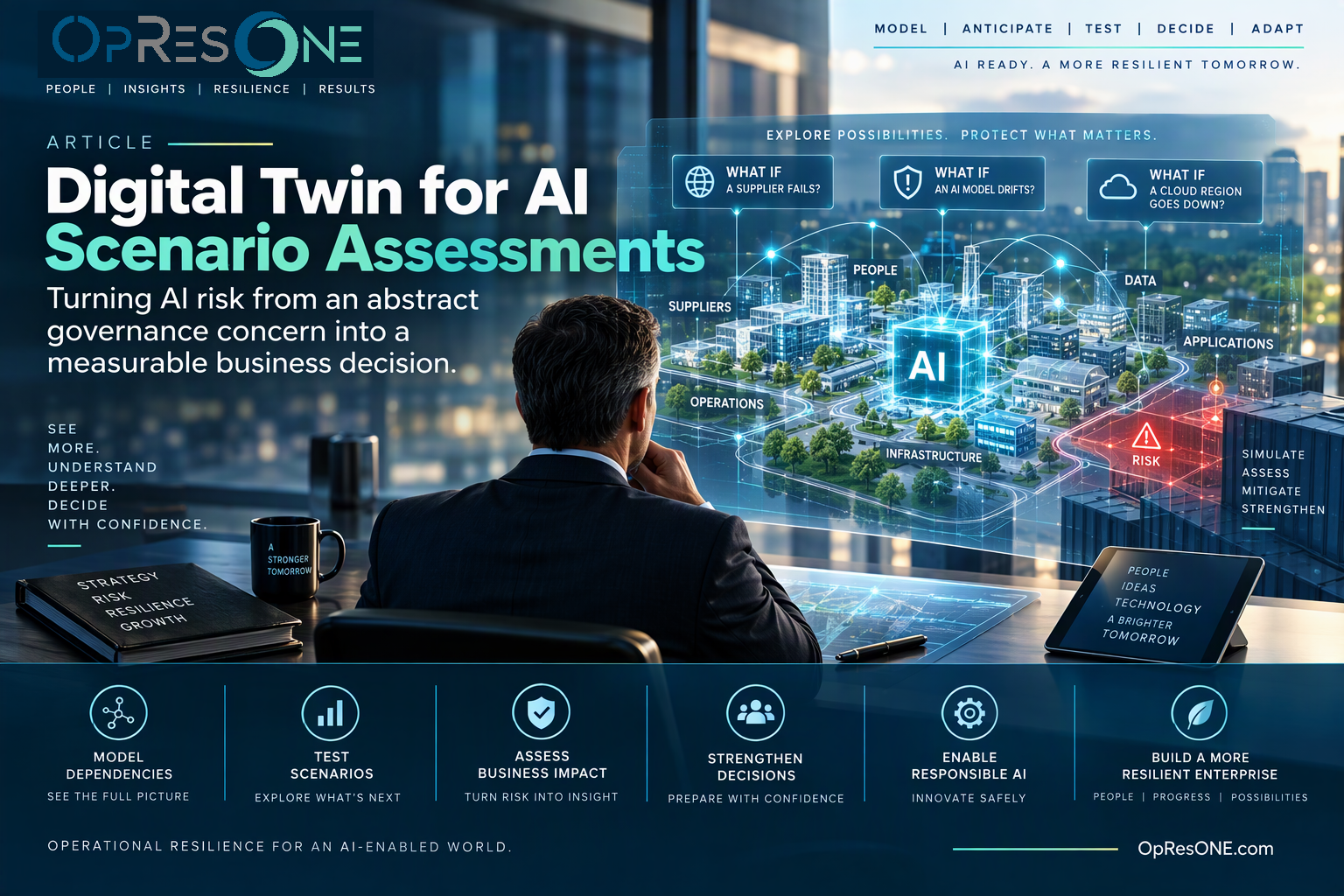 Artificial intelligence is moving rapidly from experimentation into the operating fabric of the enterprise. AI systems are influencing customer interactions, cybersecurity decisions, financial analysis, fraud detection, supply chains, software development, workforce productivity, risk management, and increasingly, decisions that once depended entirely on human judgment.
For executives, that creates extraordinary opportunity. It also creates a difficult new question.
-
Organizations invest significant time and resources creating business continuity plans, disaster recovery procedures, cyber response playbooks, crisis management frameworks, and third-party resilience programs. Those investments are necessary. Yet there is a fundamental difference between having a plan and knowing that the organization can execute it when disruption occurs.
That difference is testing.
-
For years, cybersecurity strategy has been framed largely as a contest of prevention: stronger perimeters, better detection, fewer vulnerabilities. That work remains essential. But prevention alone cannot be the whole strategy, because no organization can guarantee that every attack will be stopped. The more useful question for executives is not only "How do we keep attackers out?" but "When something gets through, can we keep delivering the services that matter most, and recover them with confidence?"
That question is the heart of cyber resilience. This article explains what it means in practice, why it requires a business-led view rather than a purely technical one, and how organizations can prepare critical services to withstand cyber disruption. It is written for CISOs, CIOs, and the executives they brief.
-
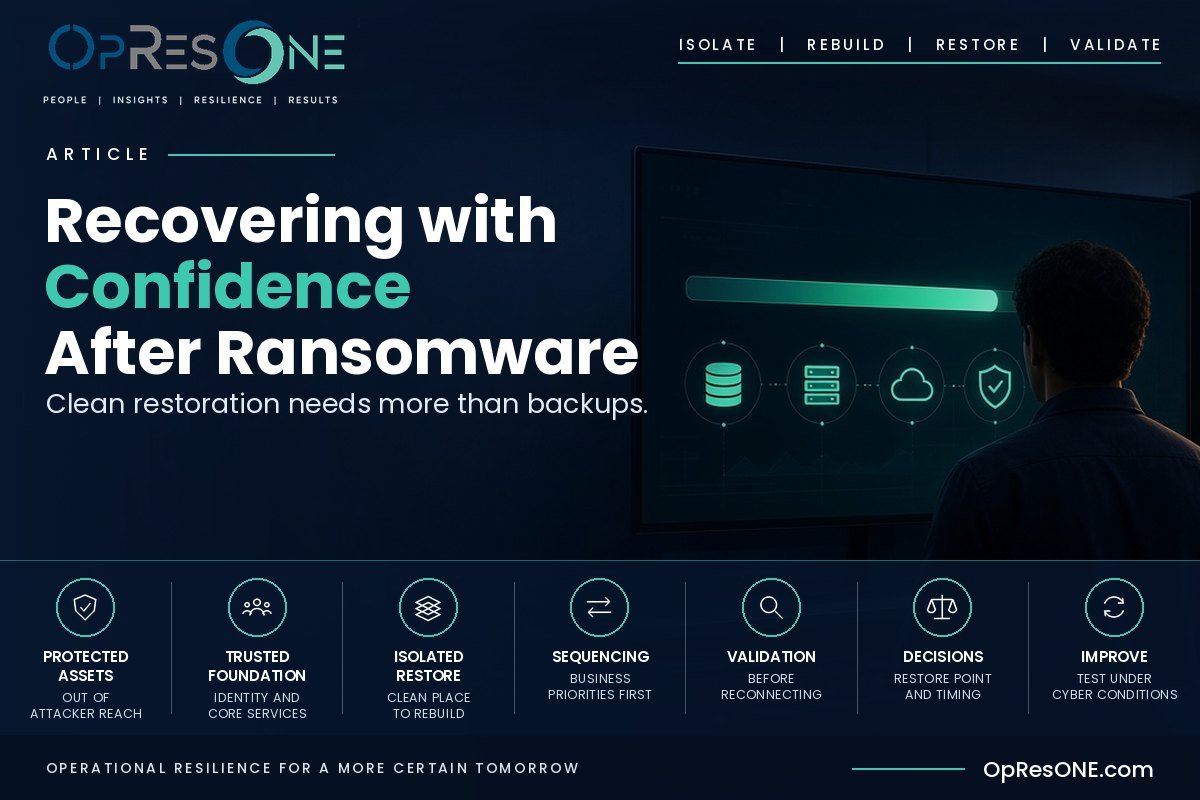
When ransomware strikes, the first question many executives ask is, "Do we have backups?" It is a reasonable question, but it is not the most important one. The harder questions are whether those backups are intact, whether they are free of the attacker's tools, which point in time can be trusted, what must be rebuilt before anything can be restored, and how the organization will know a restored system is safe to reconnect.
Clean restoration needs more than backups. It requires a recovery capability designed for an adversary who may have been inside the environment for some time, may have targeted backup systems deliberately, and may try to return. This article explains what that capability involves and how organizations can prepare for it. It is written for CIOs, CISOs, and the infrastructure and recovery leaders who would carry out the work.
-
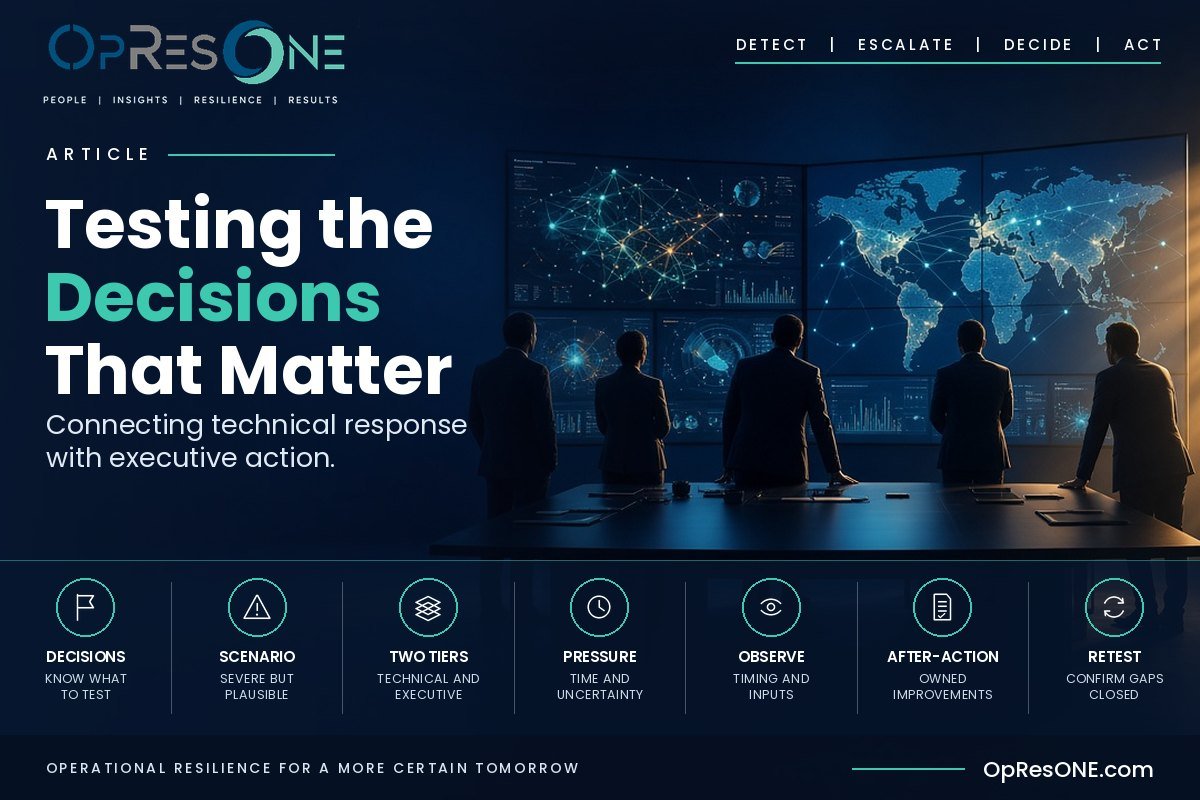
Most organizations test their technology. They run vulnerability scans, penetration tests, backup restores, and failover drills. Far fewer test the decisions that determine how a serious cyber incident unfolds: when to disconnect a business unit, whether to take a customer-facing service offline, who determines whether an incident is material, what to tell customers and regulators, and when it is safe to resume. Those decisions are made by executives, often with incomplete information and under intense time pressure. When they have never been rehearsed, even a strong technical response can be undermined by delay, confusion, or conflicting instructions.
This article explains how to design exercises that connect technical response with executive action, so that leaders practice the decisions that matter before they face them for real. It is written for CISOs, crisis and continuity leaders, and the executives who would sit at the table.
-
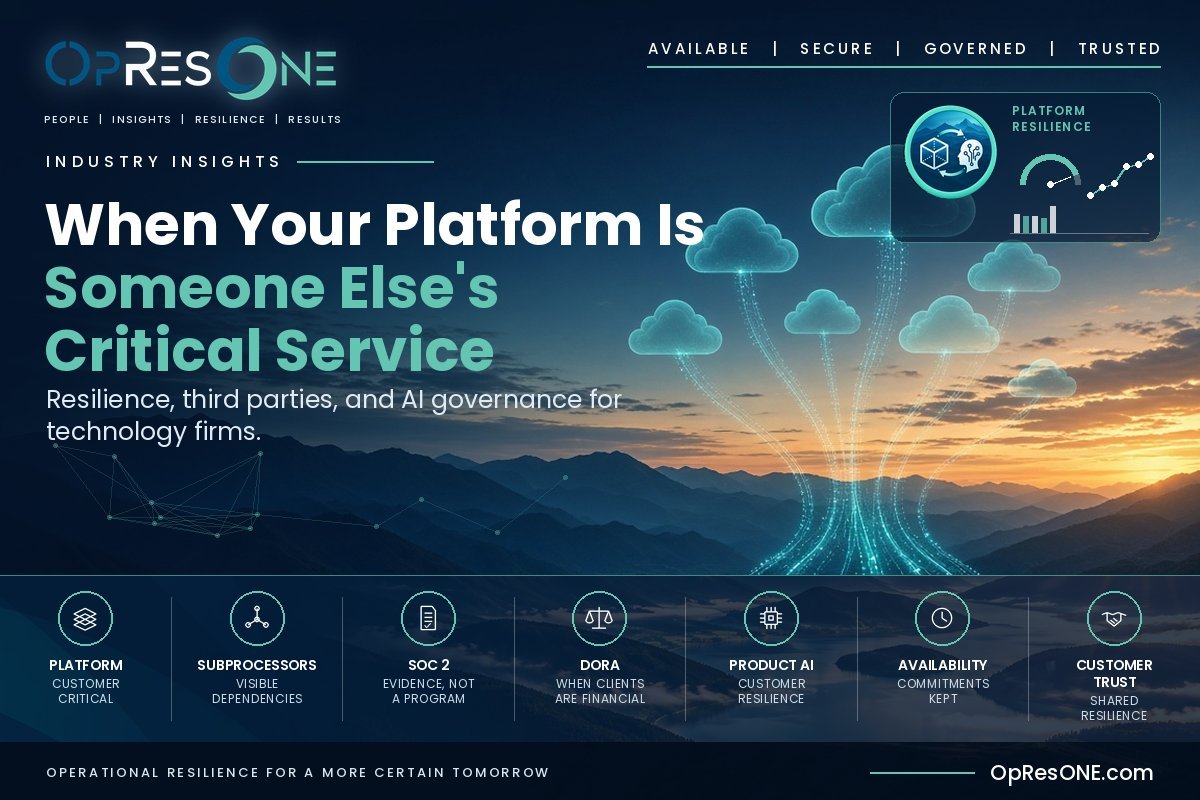
A technology firm can hold a current service-organization report, a customer contract with an uptime target, and a product roadmap for artificial intelligence, and still be unprepared for the afternoon it becomes someone else's operational incident. For many software, cloud, and SaaS companies, that is the real resilience question. The firm is not only a user of vendors. It is a third party to banks, health systems, utilities, agencies, and other businesses that have already defined the firm's platform as a critical service.
That inversion changes the work. Operational resilience is not only the firm's ability to keep its own operations running. It is the firm's ability to keep the service its customers treat as essential available, recoverable, and understandable when a subprocessor, a region, or a model fails. Third-party risk runs in both directions: the firm must manage its own suppliers, and it must be able to show customers, and in some cases supervisors, that it can be managed as a supplier. AI governance is part of the same promise whenever a model sits in the product or in the pipeline that keeps the product running.